

Fill Power Vs Fill Weight: The Comforter Terms Most People Confuse

What Is The Difference Between Fill Power And Fill Weight?
Shopping for a new comforter should be the first step toward a better night’s sleep, but the technical jargon often makes it feel like a chore. You’ll see “800 Fill Power” on one luxury label and “50-ounce Fill Weight” on another, leaving most shoppers wondering which number actually determines warmth.
If you’ve ever felt overwhelmed by these terms, you aren’t alone. Understanding the difference between fill power and fill weight is the key to choosing a comforter that fits your sleep style, budget, and climate. Our decades of experience make these details easier to navigate.
What Is the Difference Between Fill Power and Fill Weight?
Fill power measures the loft or volume of one ounce of down.
Fill weight measures the total ounces of down inside the comforter.
Together, they determine warmth, breathability, and how the comforter feels on your body.
What is Fill Power in Down Comforters?
Fill power is the measure of how much space one ounce of down occupies per cubic inch. The fluffier the down, the more space it takes up. That means two comforters with the same weight of down can feel completely different depending on fill power.
Examples:
-
600 fill power → 1 ounce expands to 600 cubic inches
-
700 fill power → 1 ounce expands to 700 cubic inches
-
800 fill power → 1 ounce expands to 800 cubic inches
A 600-fill-power comforter can weigh the same as an 800-fill-power one, but the warmth level will differ. Down traps air between its soft filaments, and it’s that trapped air that keeps you warm.
Longer, denser down filaments allow clusters to expand more. As a result, higher fill power provides more warmth with less weight- giving you a lighter, more breathable comforter that still insulates well.
More expansion equals more trapped air and that leads to a better insulation efficiency.
What is Fill Weight?
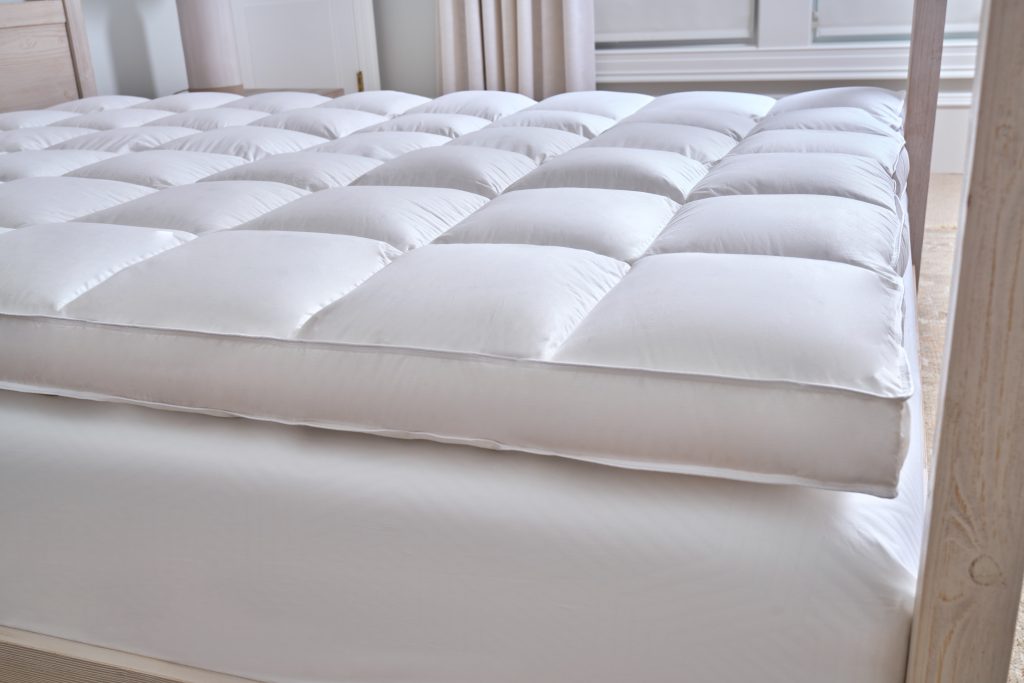
Fill weight is the physical quantity of insulation or down inside a comforter shell, usually measured in ounces. It is the physical weight of the stuffing inside the comforter shell. While fill power tells you about the quality of the insulation, fill weight is a measurement of quantity. This density provides that “heavy” or “light” sensation against your body, often giving you a sense of being tucked in.
It is a common misconception that a higher fill weight always equals a warmer comforter. In reality, weight and warmth are not the same. If a manufacturer uses low-quality down (low fill power), they must use a much higher fill weight to achieve a decent warmth level.
This results in a heavy, dense blanket. Conversely, a high fill power comforter can achieve extreme warmth with a very low fill weight, resulting in that sought-after “weightless” feeling.
Which Sleeper Profile Matches You?
To choose the right balance of these two factors, you need to look at your personal habits. Everyone’s body regulates temperature differently, and your bedding should support your specific needs.
The Hot Sleeper (The “Furnace”)
If you are a person whose body remains extremely hot, or you wake up drenched with sweat when wearing a heavier blanket, or you often wake up feeling overheated, you are a hot sleeper.
In such a case,
- Your Strategy: Prioritize High Fill Power but Low Fill Weight.
- Why it works: High-quality down clusters are naturally breathable. By choosing a low fill weight, you ensure there isn’t too much physical material trapping your body heat. This provides a crisp, light layer that feels premium but stays cool.
The Cold Sleeper (The “Iceberg”)
If you wear socks to bed to avoid turning your feet to ice or keep an extra throw blanket at the foot of your bed, you are a cold sleeper.
- Your Strategy: Look for High Fill Power combined with a High Fill Weight.
- Why it works: You need maximum insulation to trap every bit of your body heat. A higher fill weight also helps “seal” the edges of the comforter around your body, preventing cold drafts from entering when you move in your sleep.
The Sensory Sleeper (The “Weighted” Fan)
Some people don’t just care about temperature; they care about the physical sensation of the blanket. If you find comfort in the feeling of being “tucked in” securely, you are a sensory sleeper.
- Your Strategy: You can opt for Lower Fill Power and a Higher Fill Weight.
- Why it works: Very high-fill-power comforters can sometimes feel “too light,” almost like they aren’t there. If that makes you feel “unprotected,” choosing a comforter with more ounces of fill—even if the quality of the down is standard—will provide the calming pressure that helps many people fall asleep faster.
Comparing Fill Power and Fill Weight
To help you decide which is best for your bedroom, refer to the table below to see how these factors impact the final product.
| Feature | Fill Power | Fill Weight |
| Measurement | Quality & Volume (Loft) | Quantity (Ounces of Fill) |
| Main Benefit | Insulating efficiency | Physical “heaviness” |
| Texture | Airy, bouncy, and soft | Dense, flat, and substantial |
| Cost Influence | Higher power = significantly more expensive | More ounces = moderate price increase |
| Best For | Luxury seekers & Hot sleepers | Budget shoppers & Sensory sleepers |
How to Choose for Your Climate and Budget
Beyond how you sleep, your environment and your wallet play a major role in this decision.
- Warm Climates: Look for 600–800 fill power with a lower fill weight (roughly 20–25 oz for a King). This keeps things breathable and prevents overheating.
- Cold Climates: Opt for 800+ fill power in an “All-Year” or “Winter” weight (39+ oz for a King) to trap maximum heat.
- All-Season: A 650–900 fill power with a medium weight offers the most versatility for year-round comfort.
Budget Strategy
Since 800+ fill power down is a premium material, it comes with a premium price.
To get warmth without the price tag, choose lower fill power (500–550) paired with higher fill weight. It will be heavier but still warm — and more affordable.
Downright offers well-balanced constructions across these ranges to help you choose what works best for you.
The Final Verdict
When choosing between fill power and fill weight, remember that neither tells the full story on its own.
- Prioritize fill power if you want a light, cloud-like layer with high-end luxury warmth.
- Prioritize fill weight if you prefer a grounded, weighted feel—or if you want to stay warm while sticking to a tighter budget.
By checking both metrics, you can stop guessing and invest in a high-quality comforter that actually helps you sleep through the night. Whether you are looking for a lightweight summer duvet or a heavy winter quilt, you now have the tools to shop like a pro.
Frequently asked questions about fill power vs fill weight
Does a higher fill power mean the comforter is more durable?
Yes — higher fill power usually means more durable down.
Larger down clusters are more resilient and can be compressed and “fluffed” repeatedly without losing structure. Lower-quality down often contains more feathers or “fiber dust,” which breaks down and mats over time, reducing warmth.
Can I compare the fill weight of down vs. down-alternative?
No — down and down-alternative fill weights cannot be compared directly.
Synthetic fibers are naturally heavier, meaning you may need around 60 ounces of synthetic fill to match the warmth of 30 ounces of down. For synthetic comforters, ignore fill power and rely on the manufacturer’s warmth rating.
Is the fill weight the same as the total weight of the blanket?
No — fill weight only refers to the down, not the full comforter.
The total weight includes the fabric shell, which can add significant heft depending on the material. Always check “ounces of fill” when comparing comforters.
What construction is best for high fill power?
Baffle Box Construction is best for high fill power down.
This design uses internal fabric walls that allow the down to fully loft without shifting. Without these baffles, even premium 800 fill power down can migrate to the edges and create cold spots
Ready to find your perfect sleep setup? Now that you know your sleeper profile, it’s time to upgrade. Discover our collection of premium, handcrafted down comforters, made right here in Brooklyn.